
Pre-K & Preschool theme ideas for learning about bugs: insects and spiders
Find more Bug Activities for Pre-K
Books
Check here for a complete list of Books about Bugs!
Bug Large Motor Games
Flight of the Bumblebee
We play a game with this song by passing a beanbag (the “bee”) like a hot potato around the circle of children while the music played. Occasionally, I stop the music, which means the person with the beanbag is “stung” and moves to the middle of the circle.
The Tale of the Tzar Saltan: Flight of the Bumblebee ~ Nikolai Rimsky-Korsakov
Here’s a bee finger puppet (from Amazon) that can be used as the “hot potato”.
Creepy Crawly Crawl
Invite children to move like different insects!
Call out bug names and demonstrate how to move:
- Ants: Crawl on hands and knees.
- Spiders: Crab walk (hands and feet on floor, tummy up).
- Caterpillars: Inch forward by stretching and scrunching.
- Bees: Buzz around with arms out like wings.
- Grasshoppers: Jump with both feet together.
Bug Freeze Dance
Play fun, upbeat music. When the music stops, call out a “freeze” pose:
- “Freeze like a ladybug on a leaf!”
- “Freeze with your wings out like a butterfly!”
- “Freeze curled up like a roly-poly!”
Pollination Parade
Give each child a pom pom or cotton ball as “pollen.”
Children buzz around pretending to be bees, landing on “flowers” (paper flowers taped to tables or the floor). They pick up and drop off their pollen as they “pollinate.”
Bug Fine Motor Skills
Play Dough Bugs
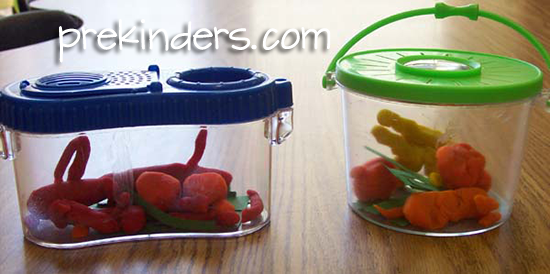
We place strips of green construction paper (for grass) in some small bug boxes (available at the Dollar Tree). Children make model bugs with play dough to put in the boxes.
Butterfly Lacing Cards
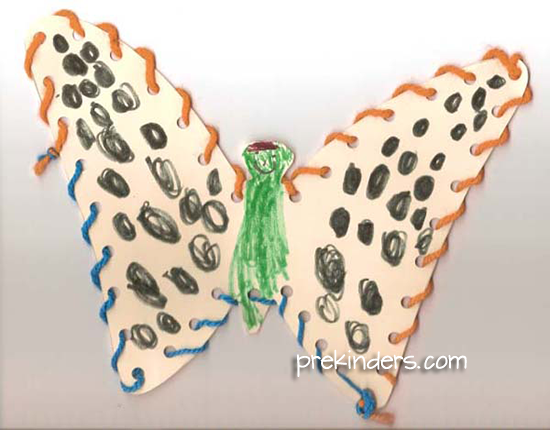
To make these, I traced a butterfly outline onto old file folders, cut them out, and punched holes around the edge. The children use yarn to lace through the holes, and decorate them with markers.
Bug Art Activities
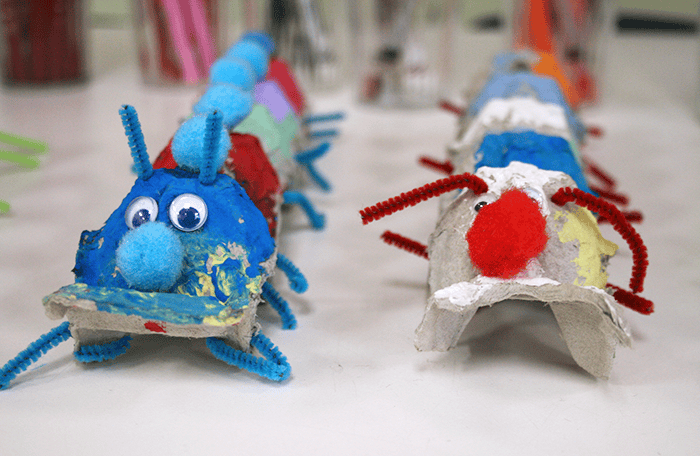
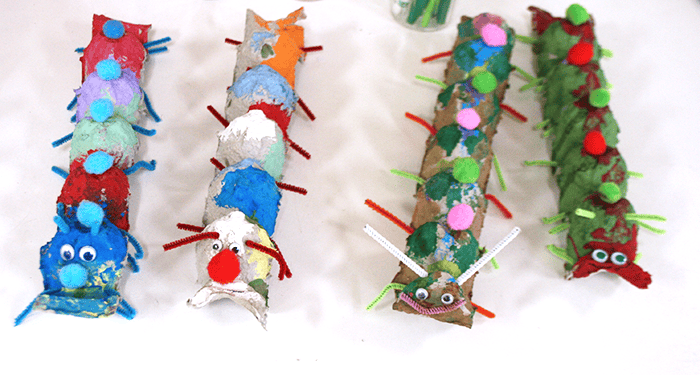
Egg Carton Bugs
We make bugs using half of a cardboard egg carton, paint, wiggle eyes, pom-pom balls, and other materials.
Egg Carton Ants
Children paint an egg carton (cut so that each child had 3 egg cups for the 3 body parts) with their choice of either red, brown, or black paint. We add wiggle eyes and pipe cleaner pieces for the antennae and legs.
Cocoon & Butterfly
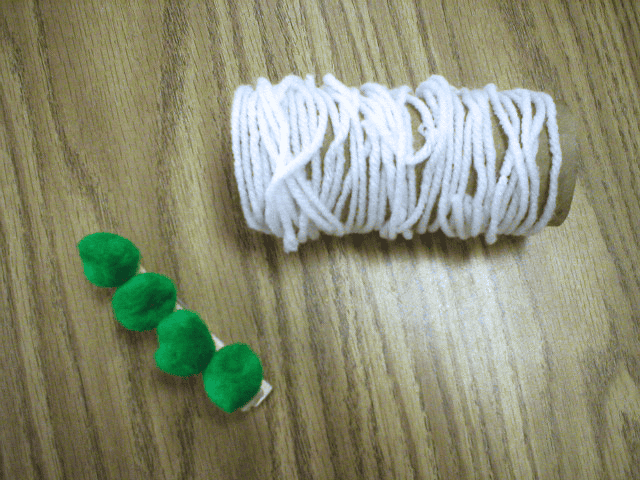
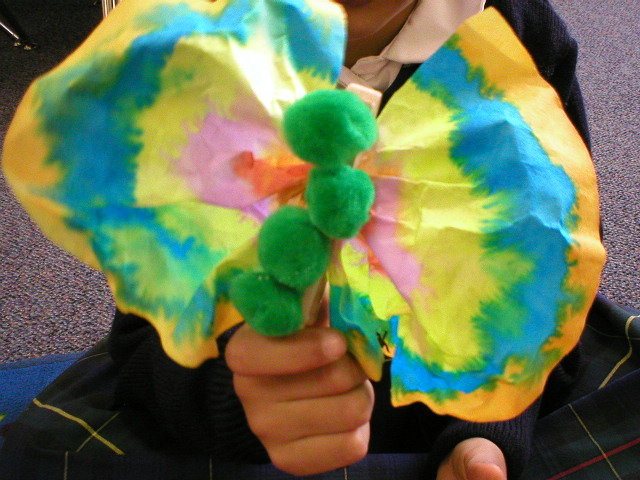
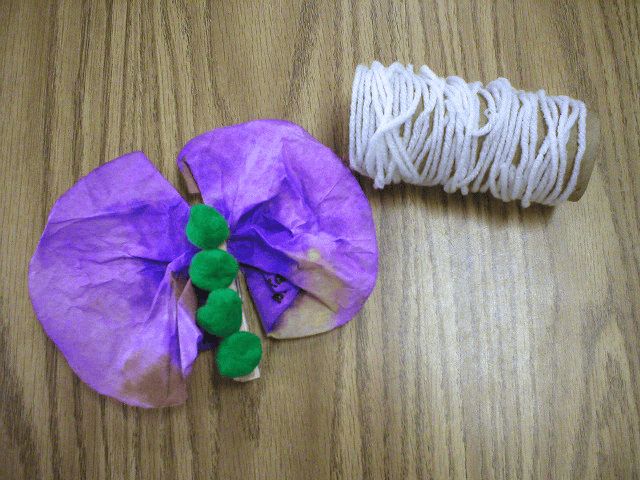
We talk about the life cycle of a butterfly, and make a cocoon with a toilet paper tube and white yarn. We decorate a clothespin with pom poms to look like a caterpillar and put it inside the cocoon. Another day, we paint a coffee filter with watercolor paints. When it is time for the butterfly to come out of the cocoon, the butterfly “wings” are then clipped in the clothespin caterpillar.
Click Beetle
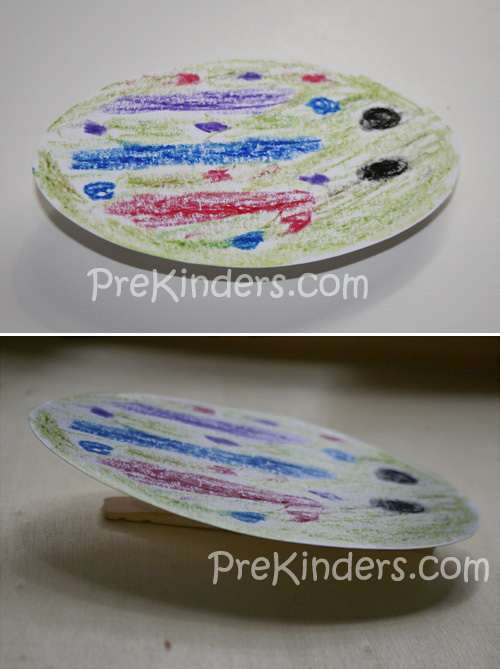
This clothespin art activity goes with the book, The Very Clumsy Click Beetle, by Eric Carle. You can read about this activity at the Eric Carle Caterpillar Exchange.
Bug Literacy Activities
Very Hungry Caterpillar Story Retelling
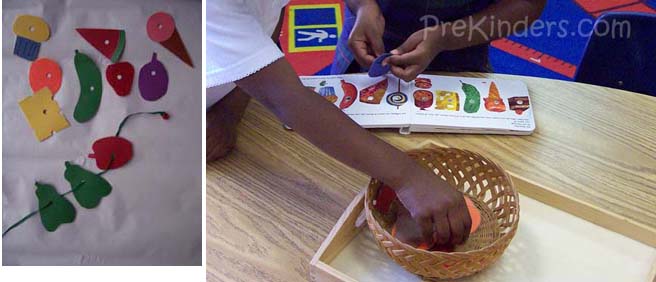
The Very Hungry Caterpillar foods are made from construction paper, and are strung on a green ribbon “caterpillar”. The children try to sequence the story from memory. Read more about this idea at Eric Carle’s Caterpillar Exchange.
Story Retelling
This is an activity that goes with any theme. Choose a book that goes with the theme, and have the children retell the story.
Read the blog post here for details: story retelling
Bug Twins
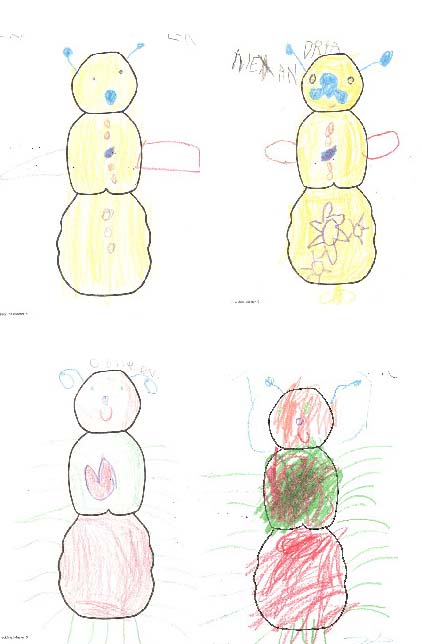
Children are given a simple bug outline. This is not a color sheet, the page only has 3 circles. They work in pairs to create bugs that are the same (“bug twins”). One child has the role of communicator and one child had the role of listener. The communicator adds features to the bug by drawing & coloring, and communicates each step to a partner. The partner listens and adds the same features to the bug without seeing the other child’s paper. This project helps with communication skills, listening, following directions, and cooperation.
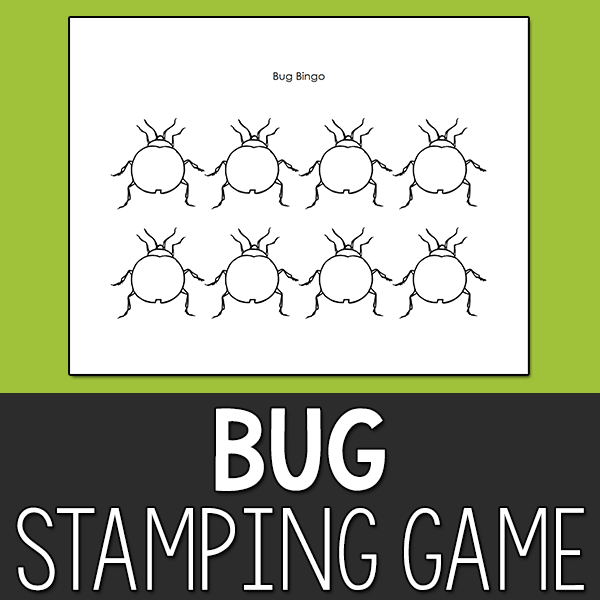
Bug Bingo Stamping Game
Use this bingo stamping game to practice letter or numeral recognition. These are editable, just type in the letters and numbers you choose and print copies. Get the printable here: Bug Bingo Game here.
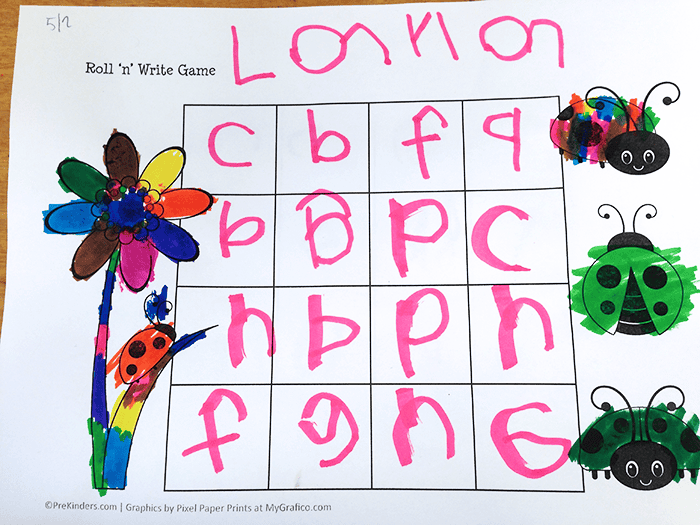
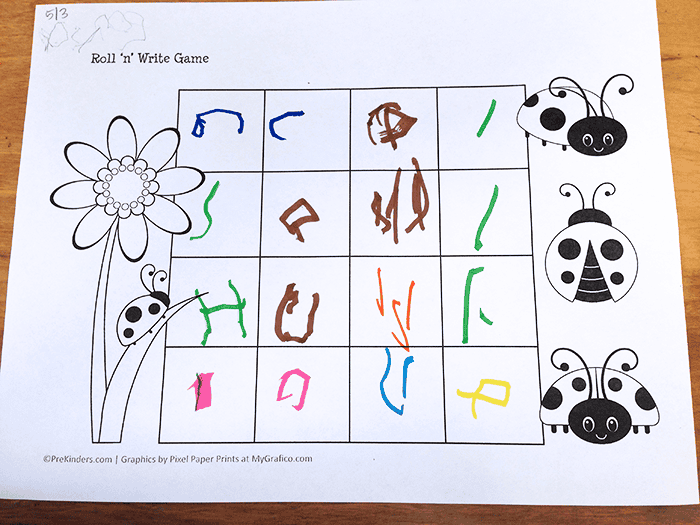
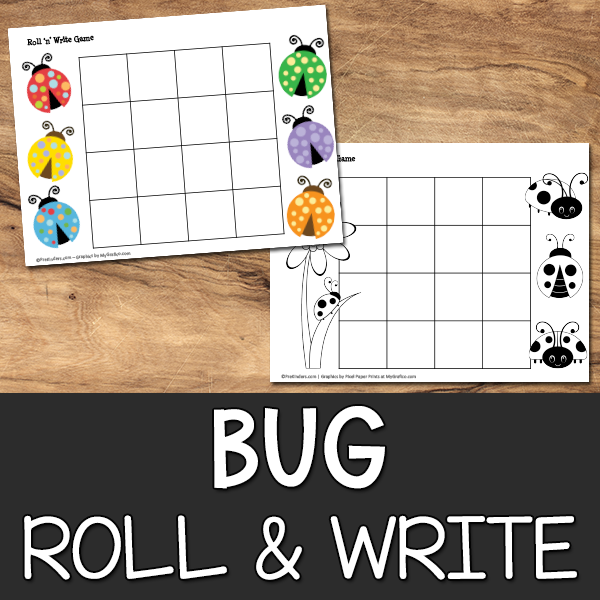
Ladybug Roll & Write Game
A fun way to practice fine motor and writing skills! Print and find directions here: Roll & Write Games. Children roll a game die with letters or numbers and write the letter they roll. The samples below show that children can succeed at this game regardless of their writing skills.
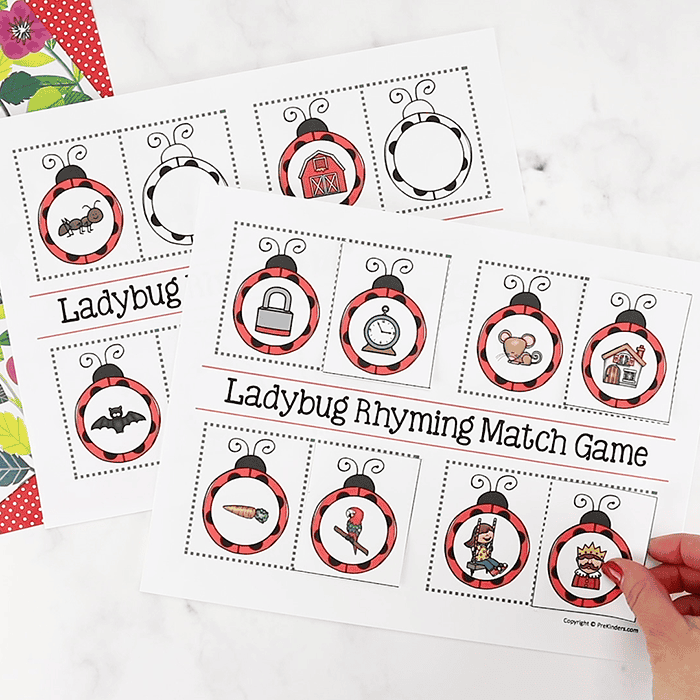
Bug Rhyming Game
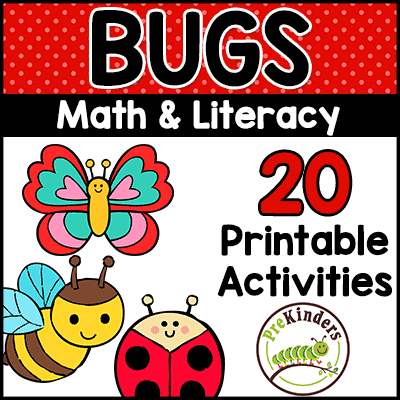
Children match rhyming word pictures in this printable game. This activity is part of the Bugs Math and Literacy pack.
More Bug Literacy
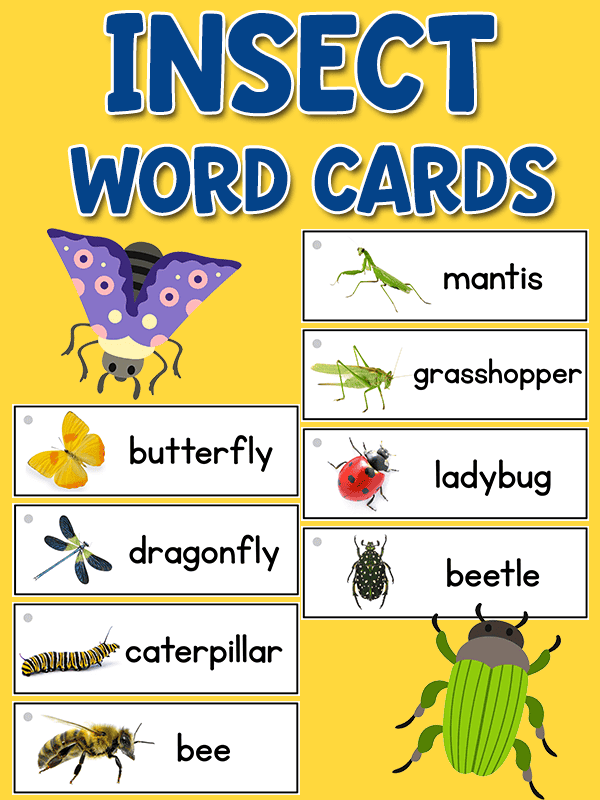
See this post for more Bug Literacy activities: Insect Picture-Word Cards
Bug Math Activities
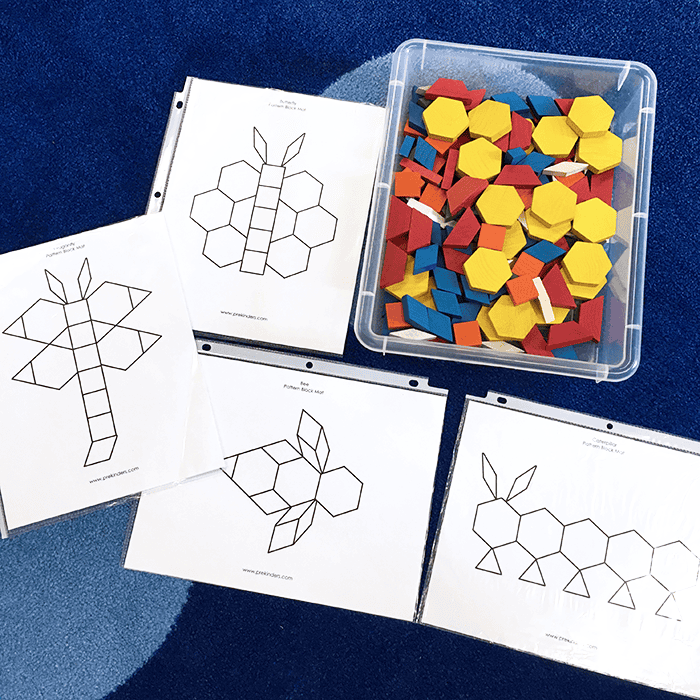
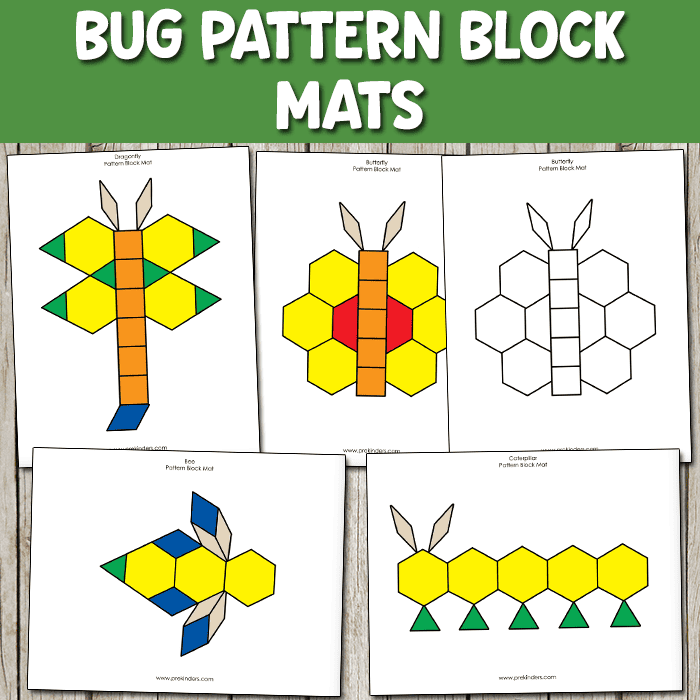
Bug Pattern Block Mats
Look for the Caterpillar, Butterfly, Bee, and Dragonfly mats here: Pattern Block Mat Printables. These come in color and black & white.
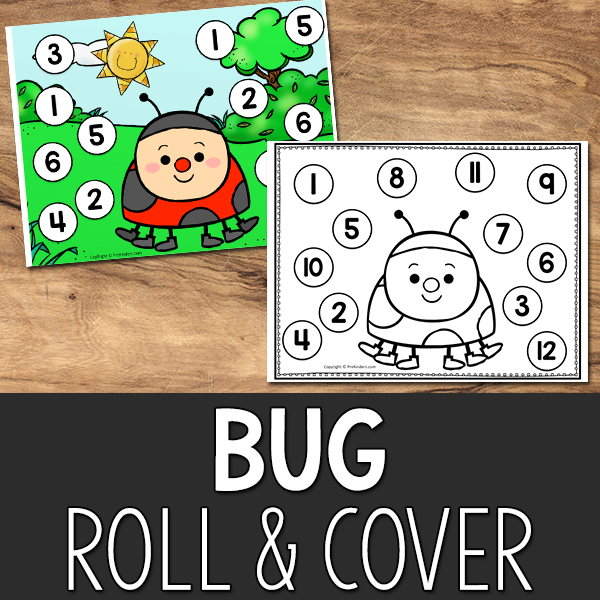
Bug Roll and Cover Game
This roll and cover game can be used to practice counting and numeral recognition. Read about and print it here: Roll and Cover Games
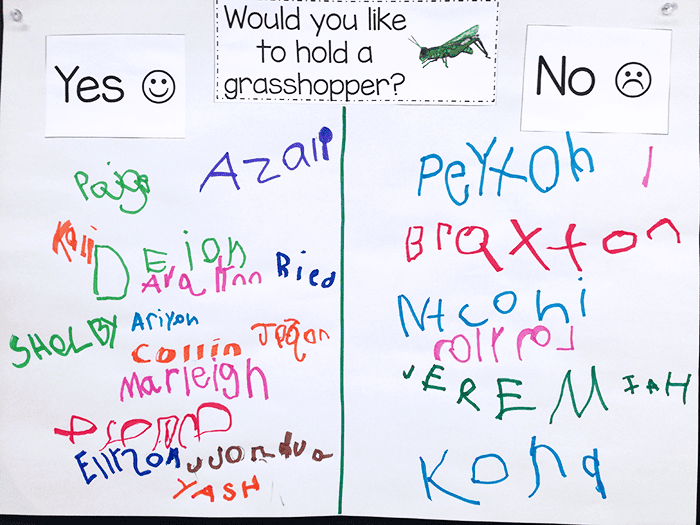
Bug Theme Question of the Day
This printable Grasshopper Question of the Day Graph is included in this bundle — Get Question of the Day printables here. These can be used on chart paper or in a pocket chart.
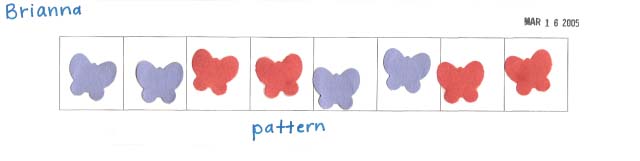
Butterfly Patterns
We use butterfly counters to make color patterns. The children also make their own pattern with paper butterfly cutouts (I used the small craft punchers to cut the butterflies).
Printable Grid Pattern Paper
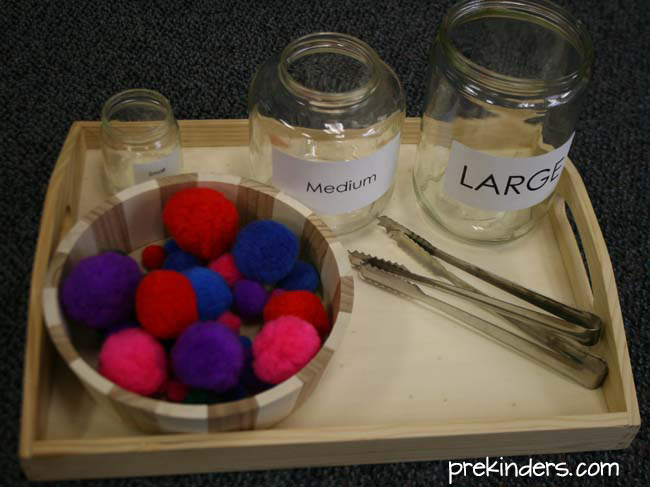
Sorting by Sizes
We use three sizes of craft pom poms (our pretend fuzzy bugs) to sort by size into different sized containers.
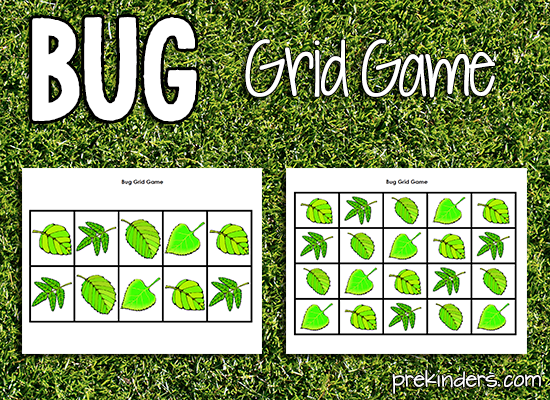
Ladybug Grid Game
Read about about print here: Grid Games
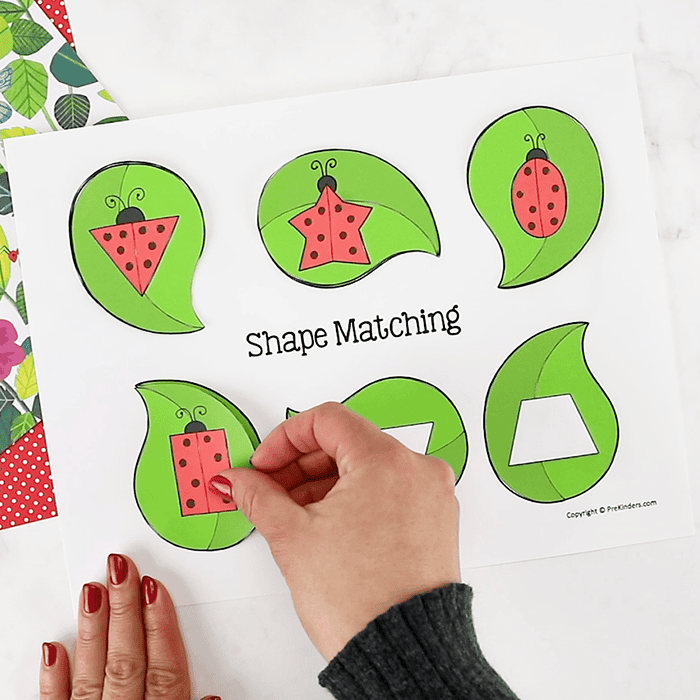
Ladybug Shapes Match
Children match ladybug shape pictures ti the shapes on the leaves in this printable game. This activity is part of the Bugs Math and Literacy pack.
More Bug Math
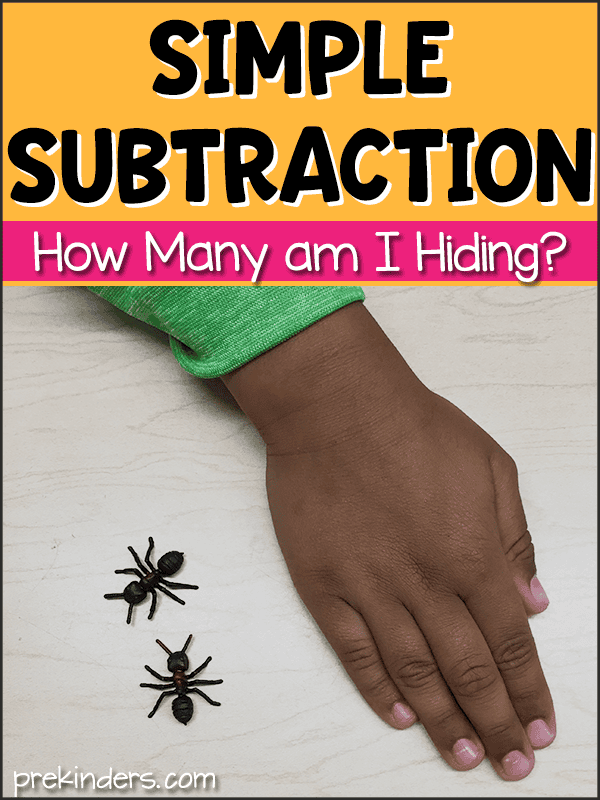
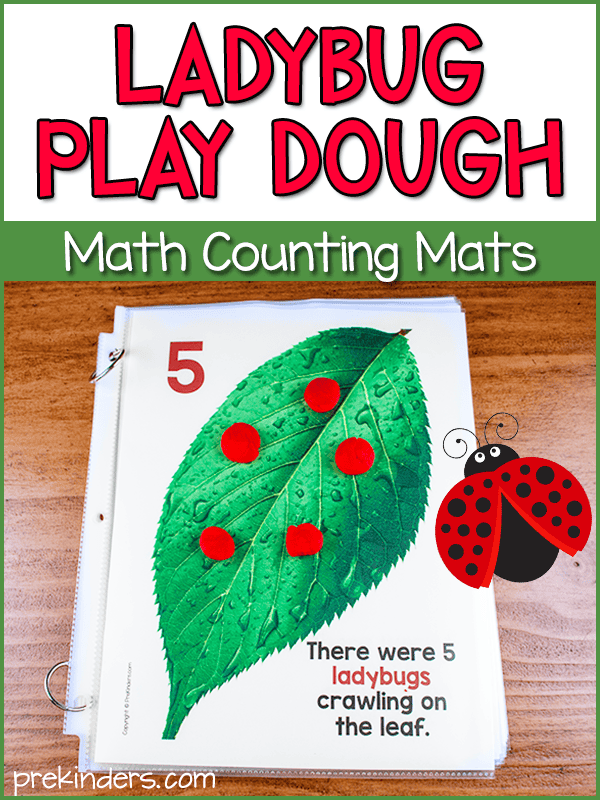
See these posts for more Bug Math activities:
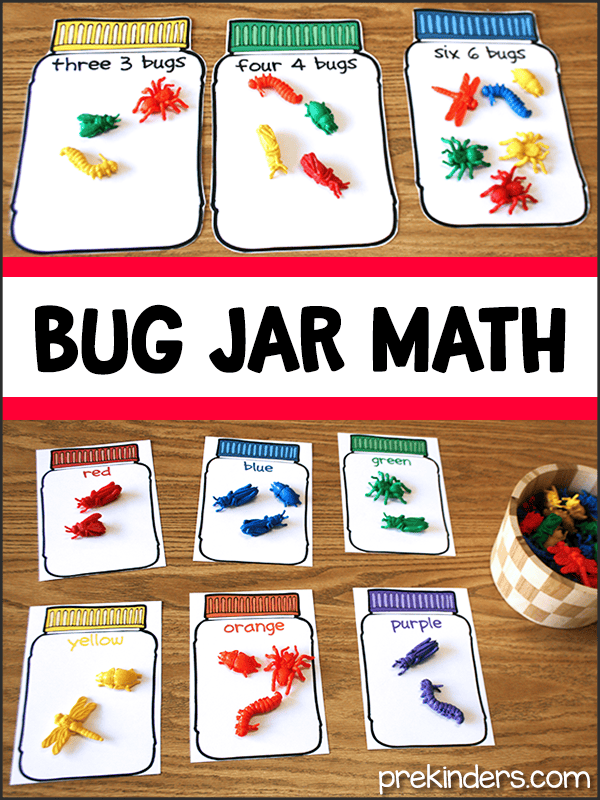
Bug Science Activities
Bug Nature Walk
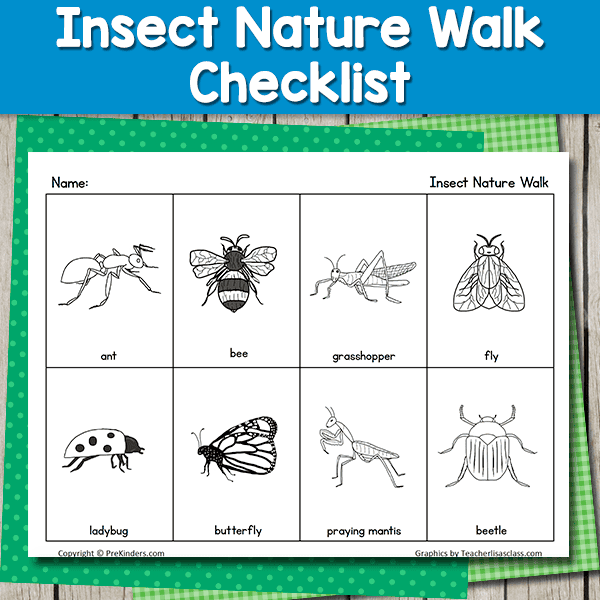
Go on a nature walk to search for bugs. You can have children record what they find either of two ways. Use this Insect Nature Walk Checklist, which you can print from the Field Trip Checklist page. Or, have children draw observational pictures of bugs they find. Before the walk, be sure to instruct children to “look, but not touch”, to be safe from stings and to keep insects safe from harm.
Make a Bug Chart
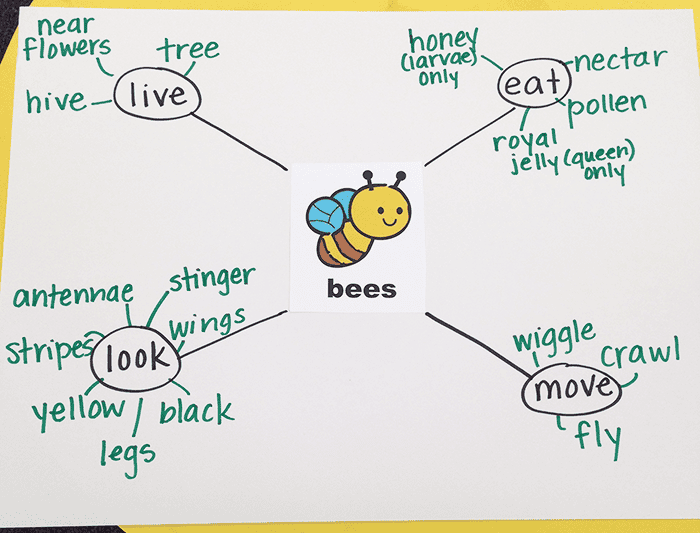
Make a chart of an insect during a circle time discussion. After reading nonfiction books about an insect and/or watching an educational video, make this chart about what children have learned about that bug. On a piece of chart paper, glue the insect in the middle of the chart, then make “branches” out from the insect with the words “live”, “eat”, “look”, and “move”.
You can choose any insect, but for our chart, my class chose a bee. We read the books Are You a Bee?, by Judy Allen and Busy Buzzy Bee, by Karen Wallace, and watched a video from Nat Geo Kids. Based on what they had learned, they children were able to tell me what to write on the chart.
I asked the children:
- Where does a bee live?
- What does a bee eat?
- What does a bee look like?
- How does a bee move?
More Bug Science
See these posts for more Bug Science activities:
Bug Cooking Activities
Ant Hill
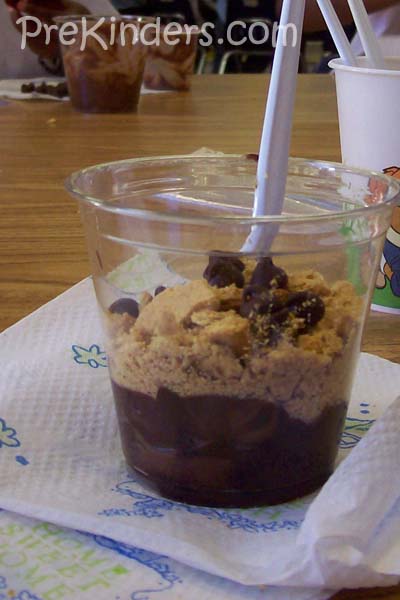
Children make an edible ant hill in a cup. We used a clear punch cup so the children could see the layers they added to their dessert. First they put a layer of chocolate pudding into the cup for the “dirt”. Then, they crushed up graham crackers in a plastic ziploc bag and poured the crumbs into the cup for the anthill “sand”. Last, they added chocolate chips for the “ants” (you could also substitute raisins instead of chocolate chips).
More Bug Activities
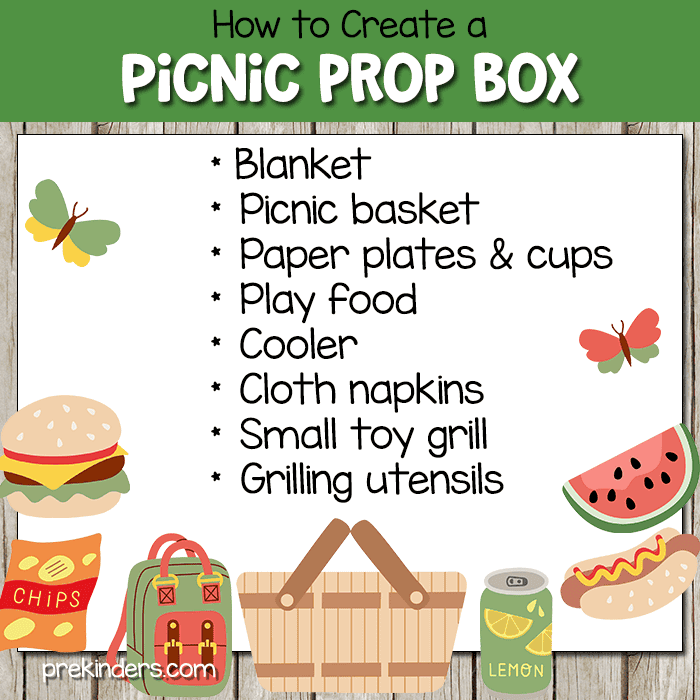
Picnic Prop Box
How to create a Picnic Prop Box for dramatic play: Add a Blanket, Picnic basket, Paper plates & cups, Cooler, Cloth napkins, Small toy grill, Grilling utensils, and Play food.
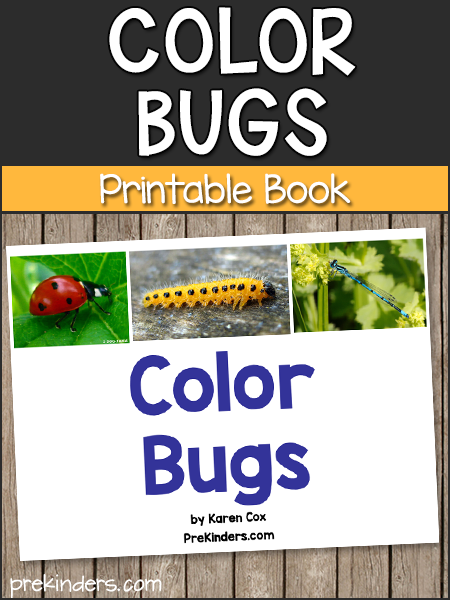
Color Bugs Printable Book
This book can be printed or projected as a slideshow. Go to the Printable Books page to download.
Rhymes
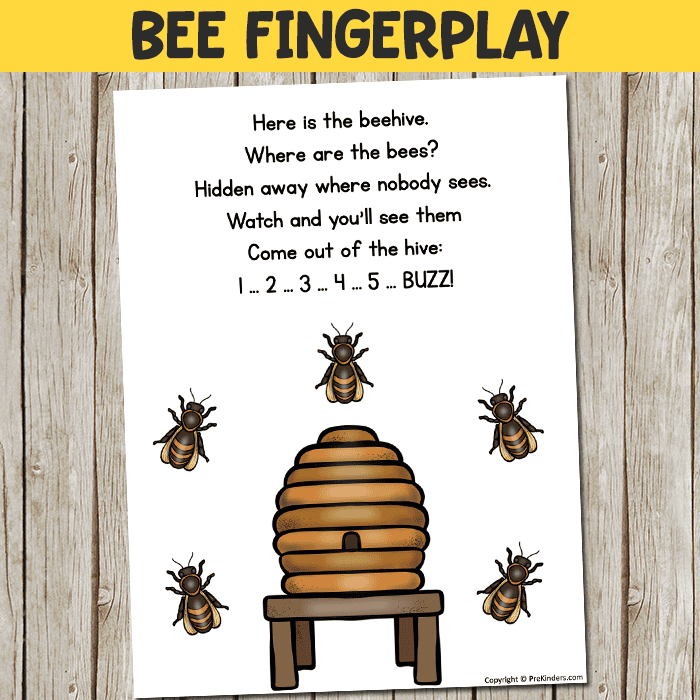
Bee Hive Fingerplay
Here is the bee hive
(Cup hands together)
Where are the bees?
(Peek into hive)
Hidden away where nobody sees.
(Hide hive behind back)
Watch and you’ll see them come out of the hive.
(Bring hive back out front)
1…2…3…4…5…BUZZ!
(Open fingers one by one. Fingers become the buzzing bees)
Look for printable posters of this rhyme on the Nursery Rhymes Page.
Songs
Find kids songs about Bugs & Insects here!
Find more Bug Activities for Pre-K
In My Shop
Links
- Insects @ Pre-KPages.com
- Bug Activities @ Early Learning Ideas
- Bug Activities @ Teaching 2 and 3 Year Olds
- Bug Fossils @ No Time For Flash Cards