
Here are some hands-on Pre-K & Preschool Ocean theme activities for learning about ocean animals. This page includes Ocean Activities for Math, Literacy, Science, and more.
Find more Ocean Activities for Pre-K
Preschool Ocean Theme Activities
Your little learners will enjoy these preschool ocean theme activities! You will find ideas for teaching math, literacy, fine motor, science, and more. Read more to find activities for art, letters, counting, songs, and how to make wave bottles.
Ocean Books
Click here for a complete list of books about Ocean Animals
Preschool Ocean Large Motor Games
Crab Walk
Children crawl like a crab from one point to another. After children have had some practice, have them figure out a way to carry a bean bag while crawling like a crab.
Swim Like a Sea Creature
Call out ocean animals and have children move like them:
- Fish: Wiggle and swish side to side.
- Crab: Walk sideways on hands and feet, tummy up.
- Octopus: Wave arms gently like tentacles.
- Dolphin: Jump and dive in place.
- Shark: Make a fin on your head and glide smoothly.
You can play ocean sounds or music for a calming vibe.
Ocean Waves
Children hold the edges of a large blue sheet or parachute and move it up and down to make waves.
If you don’t have a sheet, have them stand in a circle and make wave motions with their arms.
Variation: Call out “gentle waves,” “big waves,” or “stormy sea!”
Ride the Wave!
Have children stand on paper “surfboards” (construction paper rectangles or taped floor spots).
Call out, “Lean left! Lean right! Jump a wave!”
They balance and shift weight without moving off their board.
Preschool Ocean Fine Motor Activities
Sea Shell Play Dough Prints
Children use seashells in the play dough area to press into the play dough to make prints. You can do the same activity using self hardening clay and the children can keep them.
Crab Pinchers
Have children use clothespins and small pompoms or beads. Pretend the clothespin is a crab claw and “pinch” pom-poms to move them from one container to another.
Ocean Animal Bead Threading
Attach a paper ocean animal to one end of the pipe cleaner. Children thread blue, green, and white pony beads onto the pipe cleaners to make “bubbles in the ocean.”
Preschool Ocean Art Activities
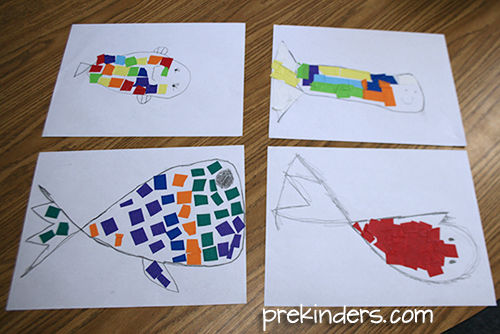
Ocean Art: Colored Tape Fish
Children draw their own fish on a piece of paper. They tear off pieces of colored masking tape and stick them on for the fish’s gills.
Wax Resist Ocean Art
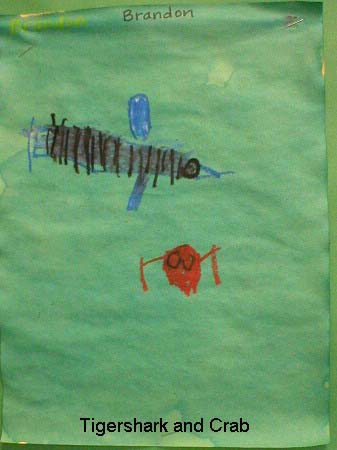
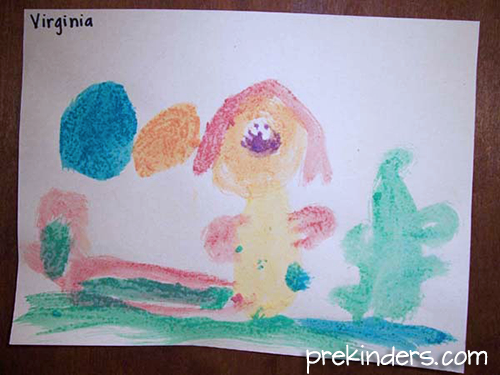
Children draw an ocean scene or one ocean animal with oil pastels. They paint over the whole paper with blue watercolor paint to create the water. The wax in the oil pastels resists the water, so the picture shows through the paint.
Ocean Art: Sea Salt Paint
The children mix their own salt paint, and then paint a picture of an ocean animal.
Salt paint recipe:
2 tsp. Salt
1 tsp. Liquid starch
Few drops of food coloring
Mix ingredients together. The salt gives a frosted or sandy appearance to the paint.
Preschool Ocean Literacy Activities
Ocean Bingo
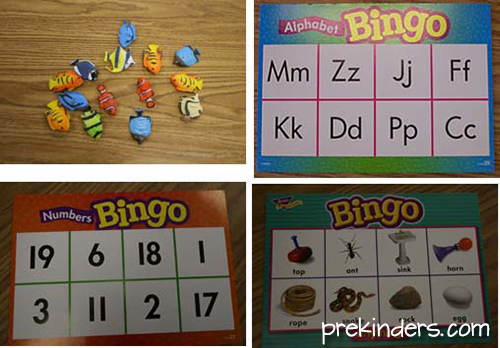
Use this for Literacy or Math. Use plastic fish counters to cover the letter/number/shape on the bingo cards. We use these to play alphabet bingo, number bingo, shape bingo, or rhyming bingo.
Ocean Roll & Write Game
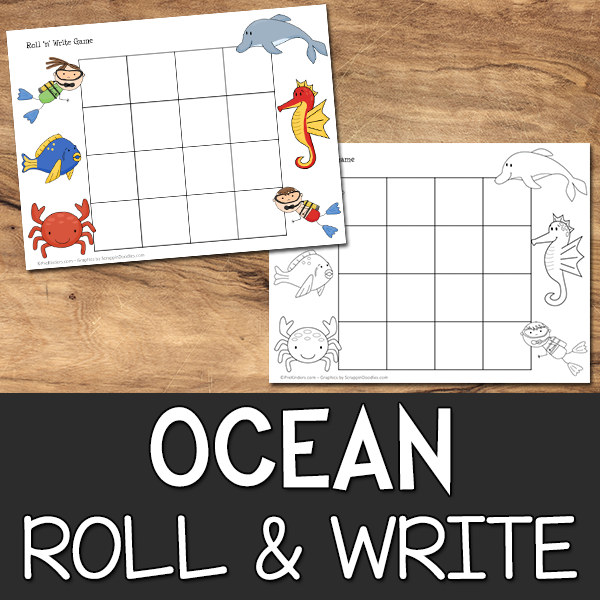
Children love this game to practice writing skills! Print and find directions here: Roll & Write Games
Ocean Bingo Stamping Game
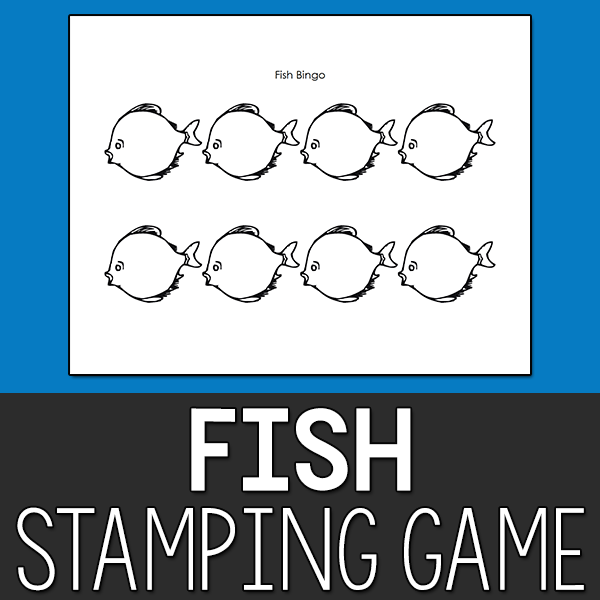
Use this bingo stamping game to practice letter or numeral recognition. These are editable, just type in the letters and numbers you choose and print copies. Get the printable here: Fish Bingo Game here. There’s also a Seashell game!
Ocean Story Retelling
This is an activity that goes with any theme. Choose a book that goes with the theme, and have the children retell the story.
Read the blog post here for details: story retelling
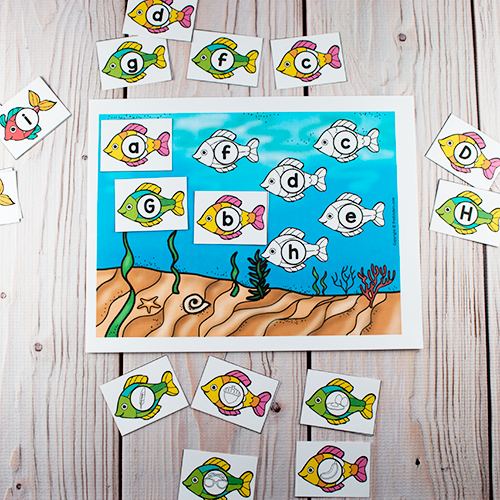
Ocean Alphabet Activity
Children can match letters or match letters to beginning sounds with this ocean alphabet activity: Purchase the Ocean Math and Literacy pack here.
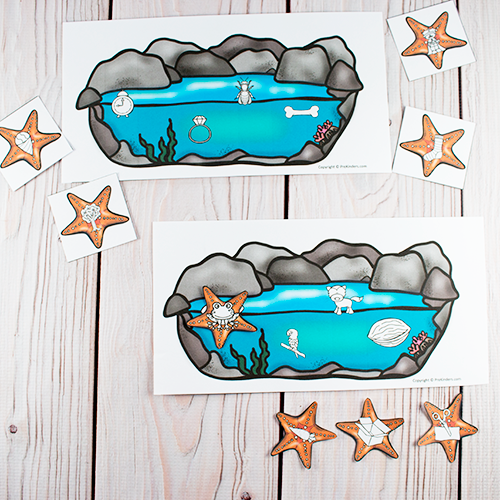
Ocean Rhyming
Children can match rhyming pictures on the starfish to the rhyming word pictures in the tide pool with this ocean rhyming activity: Purchase the Ocean Math and Literacy pack here.
Preschool Ocean Math Activities
Ocean Math Game: Fishing Game
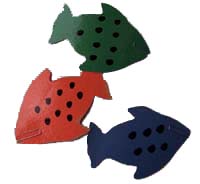
Our “ocean” is a blue shower liner on the floor. Paper fish have 0-10 dots on them, with a paperclip attached, and are tossed onto the “ocean”. Children catch a fish with magnetic fishing pole, count the dots on the fish, and write or stamp the numeral on a fish cutout. The magnetic fishing poles were made with a magnet wand tied to a rhythm stick with string.
Ocean Math Game: Fish Flop
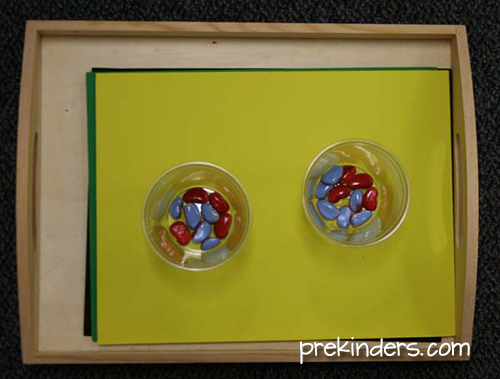
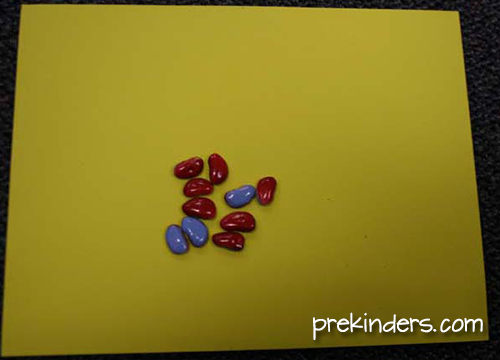
Children use spray-painted beans (one side yellow, one side blue) as pretend fish. Ten fish are placed in each child’s cup. The children dump the cup onto the table and count to see how many fish flopped on the blue side and how many flopped on the yellow side.
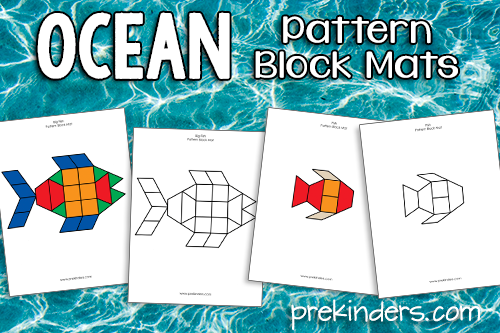
Ocean Pattern Block Mats
Read about and print here: Pattern Block Mat Printables. (Go to this page and look for the fish mats.)
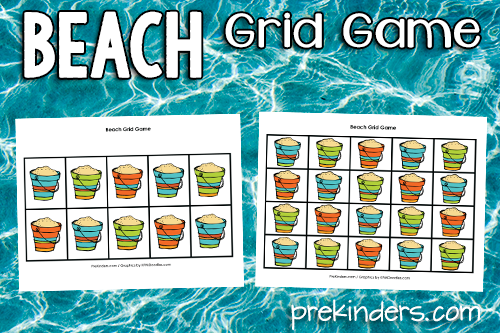
Ocean Grid Game
Read about about print here: Grid Games
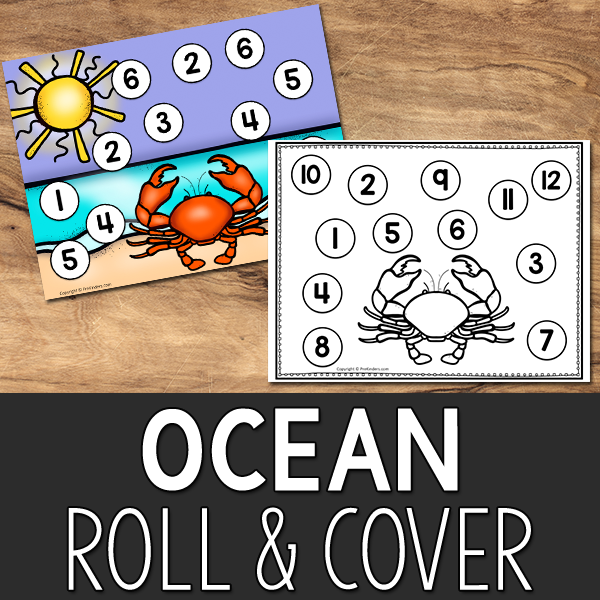
Ocean Roll & Cover Math Game
This roll and cover game can be used to practice counting and numeral recognition. Read about and print it here: Roll and Cover Games
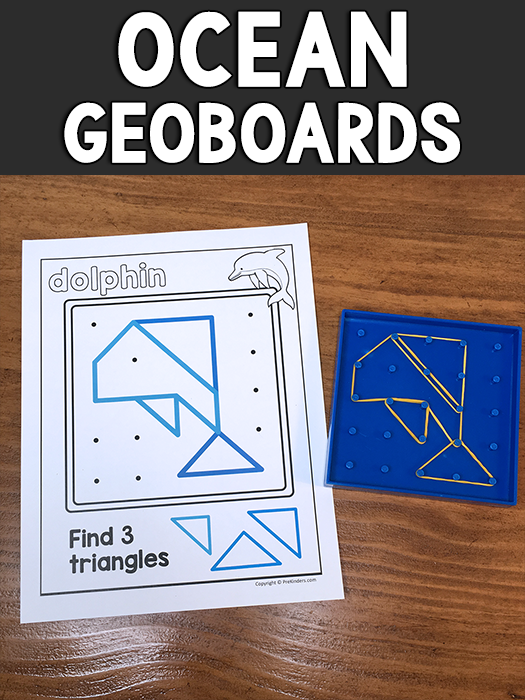
Ocean Geoboards
Children will practice shapes and fine motor skills by creating the ocean designs on the geoboards. Purchase these Ocean geoboard cards here.
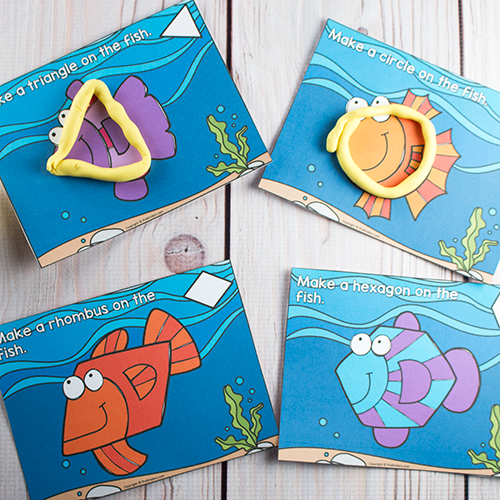
Ocean Shapes Play Dough Mats
Children can build the fish shapes with these ocean shapes mats: Purchase the Ocean Math and Literacy pack here.
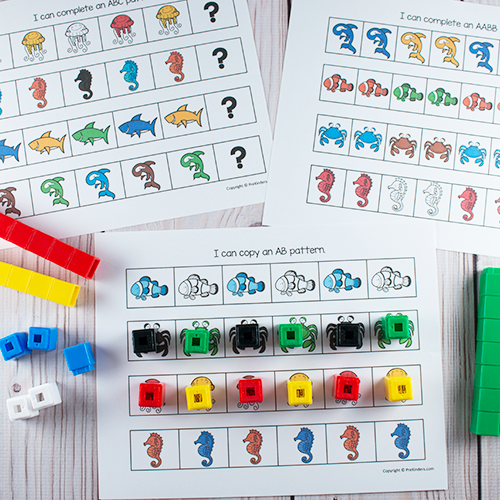
Ocean Patterns
Use colored manipulatives to practice ocean patterns! Includes AB, AABB, ABC, ABB, AAB patterns. Purchase the Ocean Math and Literacy pack here.
Preschool Ocean Science Activities
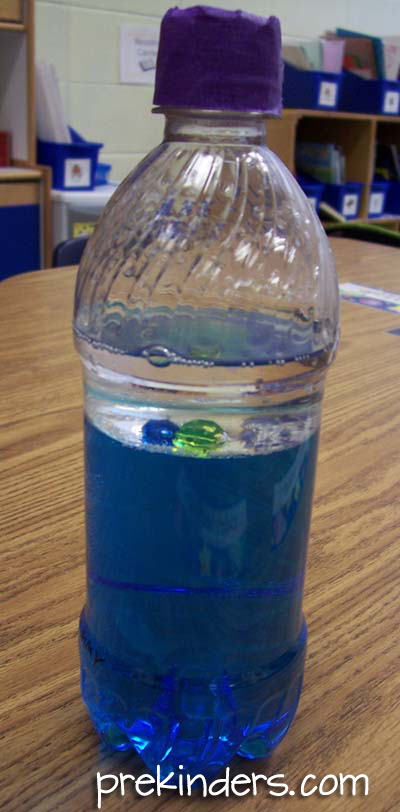
Ocean Wave Bottles
Children use a funnel to pour a cup full of baby oil (or cooking oil) into a clear plastic bottle. They fill the bottle the rest of the way with water. We give the liquid a chance to settle, then add a few drops of blue food coloring. It’s fun to watch the blue as it drops through the oil and “explodes” into the water. Last, we add plastic “fish” (sequins), and make waves by turning the bottle sideways and rocking it gently.
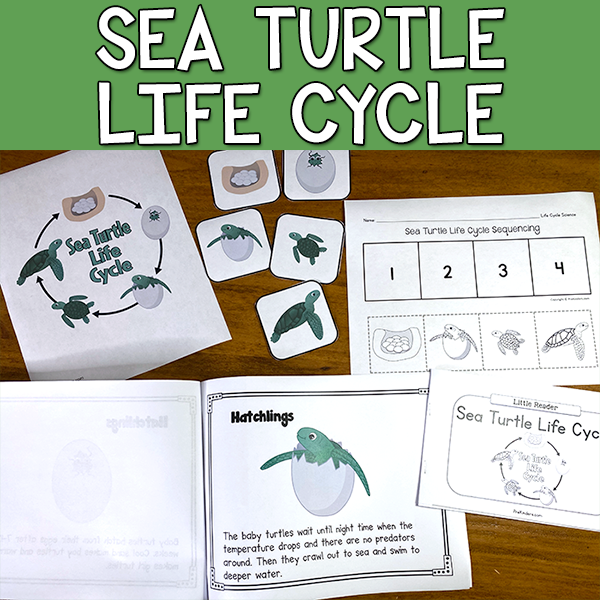
Sea Turtle Life Cycle
This Sea Turtle Life Cycle set includes life cycle posters, sequencing cards, mini book for students in black and white, and a full size book in color for a read aloud. Teach your preschoolers about sea turtles and how they grow! Purchase the Sea Turtle Life Cycle here.
Ocean Cooking Activities
Ocean Snack: Tuna Fish Sandwich
With this snack, we get to taste something that comes from the sea. We use a fish cookie cutter to cut two pieces of bread. We make tuna salad by adding mayonnaise and sweet pickles to a drained can of tuna. Then, spread the tuna on the sandwich.
Ocean in a Cup
We place three vanilla wafers in a ziplock bag and crush them to make sand. We pour the sand in the bottom of a clear cup, and scoop blue Jello on top. Last, we add gummy fish.
More Ocean Activities
Ocean / Beach Prop Box
Suntan lotion bottles, Sunglasses, Flip flops, Radio, Swim fins, Face mask, Beach hats, Beach ball, Towels, Ice chest, Juice cans, Cassette tapes of beach songs, Buckets, Pails, Sand molds, Beach chairs, Mini umbrella
Ocean Related Nursery Rhymes
Nursery rhymes that go well with an Ocean Theme:
- Rub a Dub Dub
- Catch a Floater
Catch a floater, catch an eel,
Catch a lazy whale,
Catch an oyster by the heel
And put him in a pail.
Look for a printable poster of the Rub a Dub Dub nursery rhyme on the Nursery Rhymes Page.
Ocean Songs
Find lots of Ocean Songs for Music and Movement
Find more Ocean Activities for Pre-K
Ocean Activities In My Shop
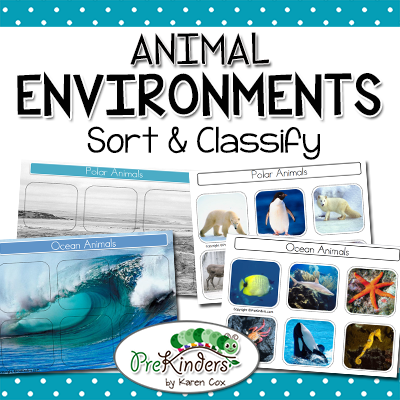
You might like this Animal Environments Sort & Classify pack, which includes ocean, polar, safari, forest, and farm animals and their environments. Available in my shop.
Ocean Preschool Links
- Ocean Unit @ Pre-KPages.com
- Rainbow Fish Craft by Ivory Gilcher
- Starfish @ Teaching 2 and 3 Year Olds
Title image graphics by Kate Hadfield Designs.