Here are some lessons and activities for teaching Sizes & Measurement in Pre-K and Preschool.
Books
Click for a list of Size & Measurement Books for Pre-K children.
Cookie Cutter Sizes
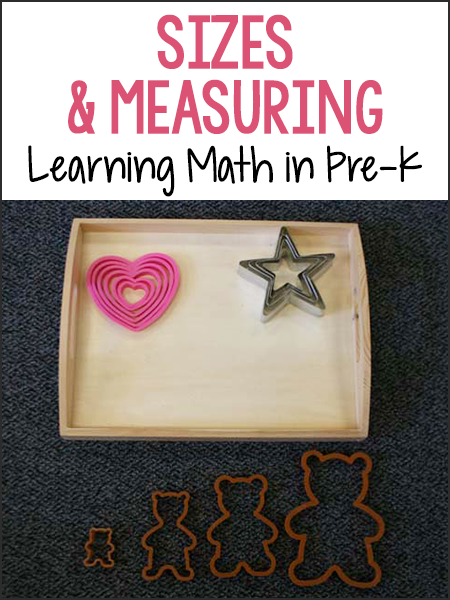
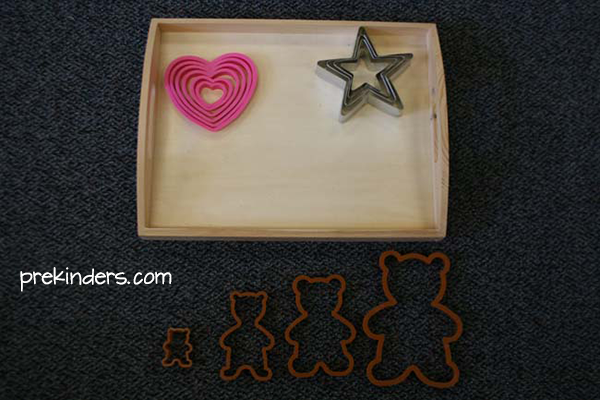
Many cookie cutters can be found that come nested in a variety of sizes. You can often find them for different holidays, for example, I have sets of pumpkins and hearts. The bear set can be used anytime, or with the Goldilocks story. Children simply put them in order from smallest to largest. To clean up, they have to “nest” them in correct size order.
Size Hunt: Outdoor Learning
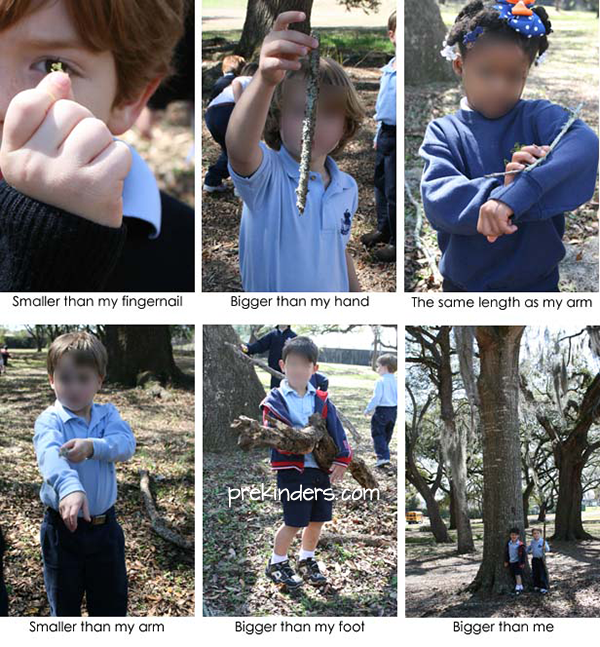
Our class went on a nature walk “size hunt” to find things in the outdoor environment of different sizes: something smaller than our fingernail, bigger than our hand, longer than our arm, smaller than our foot, bigger than our whole body, larger than a leaf, smaller than a house, etc.
Building Sizes with Blocks
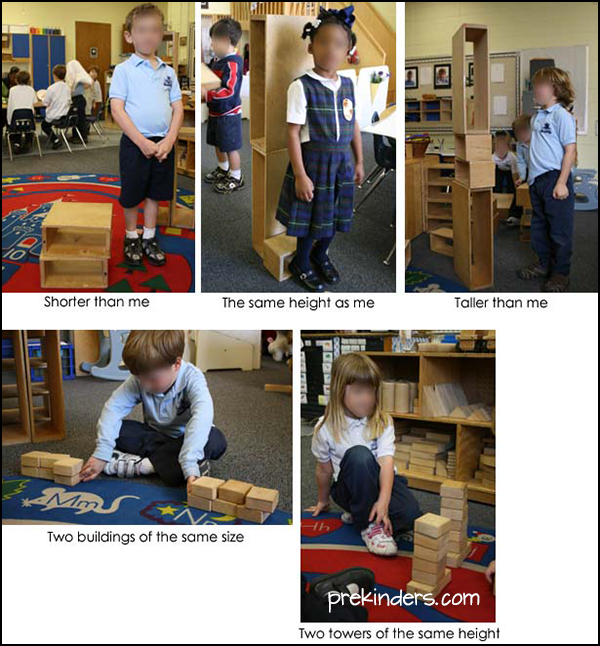
Children used the blocks to build towers that are smaller than their body, larger than their body, and the same size as their body. They also built two towers of the same size.
Make Sizes with Cubes
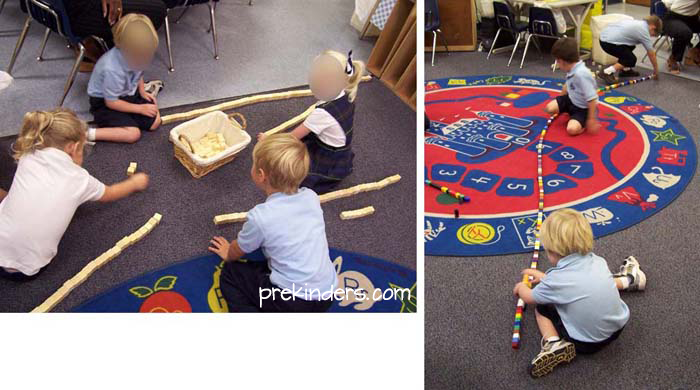
Children use wooden cubes or Unifix cubes to make long and short lengths.
Large and Small Play Dough Snakes
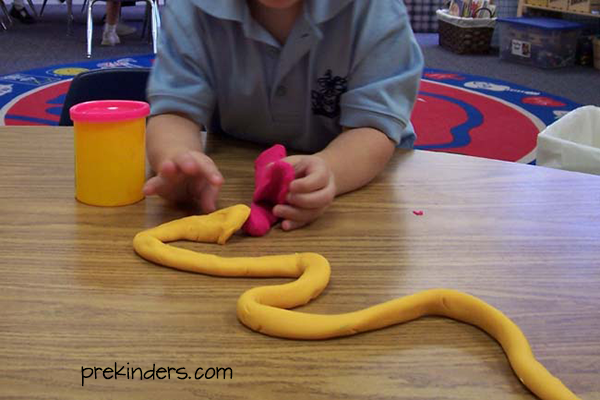
Children use play dough to make a short snake and a long snake.
Large and Small Straw Snakes
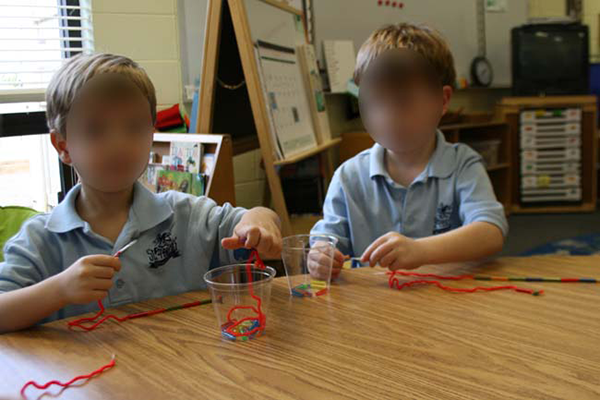
Each child is given a cup of 20 straw pieces (straws are cut into 1-inch pieces) with two pieces of yarn. Tie a plastic needle to the end of each piece of yarn for stringing, or place tape on the end of the yarn to make a “needle”. Children use problem solving skills to figure out how many pieces of straw to string on each piece of yarn in order to make a long snake and a short snake.
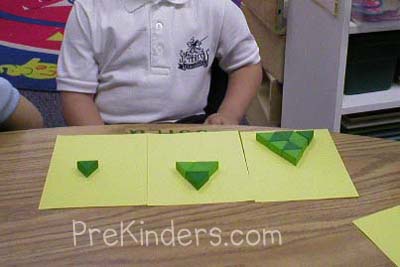
Pattern Block Sizes
Children used the green triangle pattern blocks to build small, medium, and large triangles. They did the same with the orange square pattern blocks.
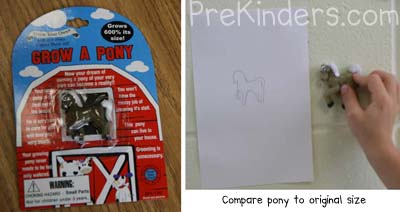
Super Absorbant Polymers
These “growing toys” can be found in many stores for $1.00. You immerse them in water and they grow a little more each day. I trace around the object before placing it in the water so that we can compare it’s size each day to the original size. After it fully expands, we take it out of the water to watch it shrink back to it’s original size.
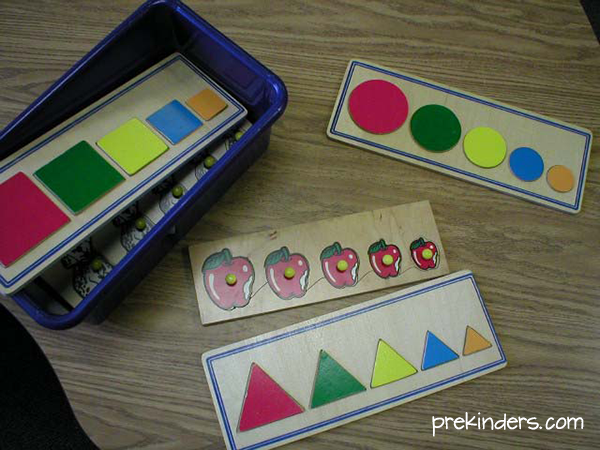
Puzzles for Ordering by Size
These puzzles were purchased by my school from an educational supply company. They help the children notice things of different sizes and give them practice for ordering by size.
Don’t miss the math resource page!